13 Aug

From Day One: The Unmistakable Constellation Difference

Cybersecurity may evolve rapidly, yet knowing what assets exist remains a prerequisite for protecting them. Networks are no different.

Constellation Difference

Network Monitoring Is About Context, Not Merely Status

CISA identifies continuous, comprehensive asset visibility as a basic precondition for effectively managing cybersecurity risk. NIST’s current cybersecurity guidance also begins with identifying and maintaining an inventory of the assets an organization depends on.

But knowing what should be there is only half the picture. Next, you need to determine what is actually on the network. Then go further. Can you reach those assets, and are they responding? What should you measure? What traffic is moving through the network? What requires attention? Has this happened before?

Each question brings you closer to the necessary context, transforming isolated monitoring signals into a more complete understanding of what is happening across your network.

Knowing whether a device is up or down is only the starting point. Meaningful network monitoring provides the context behind that status: how devices are connected, how they are performing, what traffic is moving through them, what conditions triggered an alert, and whether similar events have occurred before. Status tells you what happened. Context helps you understand why it matters and where to look next.

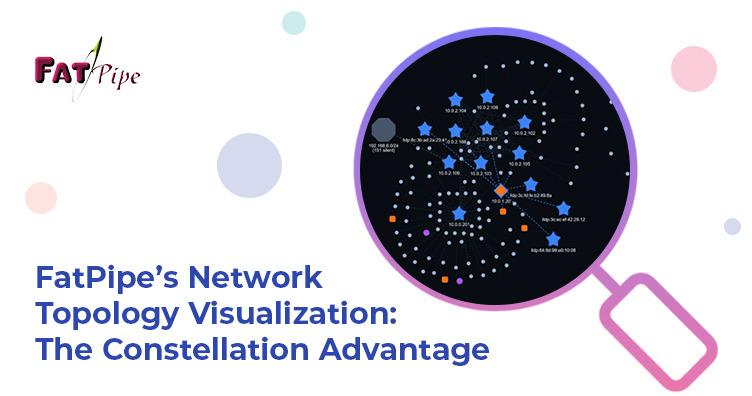
Different signals. One connected view.

A new Constellation is taking shape.

Technologies Have Generations. Operational Realities Remain at the Core of Network Monitoring.

Network technologies change rapidly, but the operational realities of managing a network evolve much more slowly. Devices still need to be discovered, relationships understood, performance measured, traffic interpreted, anomalies detected, and events placed in context. FatPipe understands that these customer challenges persist regardless of how the underlying technologies evolve.

Constellation is different because it returns to these enduring operational realities and connects them with the visibility modern networks make possible.

Technologies evolve. Operational realities are by and large constant. Constellation provides the connected visibility needed to understand them. The realities are not new. Seeing them together is.

Please Like and Share
04 Aug

Every Alert Matters: Proactive Alert Management for Resilient Networks

In a world where networks support everything from patient care to financial transactions, waiting for users to report a problem is no longer acceptable. Effective alert management, supported by proactive alerts and clearly defined severity levels, is the foundation of a strong network monitoring strategy.

Severity levels help network teams understand the significance of an event and respond with the appropriate priority. They remove the tension from the NOC teams and network administrators, giving peace of mind that they can handle a condition well, especially one that requires immediate attention.

Severity Levels for the Right Operational Context

At FatPipe, these severity levels are designed to give every alert the right operational context. The goal is not simply to generate notifications, but to help teams understand what happened, how significant it is, and what response is appropriate. While FatPipe supports a broad range of alert triggers across the network, those events are organized into four clear severity levels, Critical, Major, Warning, and Info, to make prioritization simpler and more actionable.

FatPipe EnterpriseView: Precision Alert Configuration

FatPipe EnterpriseView (EV) enables administrators to configure alert rules across network entities and assign severity levels based on the potential impact of each event.

Event detected → Severity level assigned → Events tracked by severity → Right team notified → Priority-based action taken

Alert triggers can cover device availability, connectivity, performance, and security conditions. This range is important because modern networks contain numerous devices, links, applications, and services that must be monitored at the same time.

An important unmonitored condition can create a blind spot that allows a performance issue, outage, or security event to go unnoticed. Comprehensive alert configuration helps network teams identify these conditions before they cause a larger disruption.

 When an alert is triggered, EnterpriseView can notify the appropriate personnel by SMS or phone, helping teams respond even when they are away from the monitoring console.

FatPipe’s alert framework has been shaped by years of customer feedback, real-world network incidents, and changing security requirements. Severity levels determine response priority, while detailed reporting helps ensure that events remain visible, documented, and actionable.

Alerts create value only when they lead to the right action. Effective alert management is not about generating the largest number of notifications. It is about understanding what occurred at each severity level and giving the right people enough information to act before an issue becomes a serious outage or security incident.

Please Like and Share
27 Jul

Seamless Failover, Unbroken Sessions: Elevating Unified Communications with FatPipe

Microsoft Teams has more than 320 million monthly active users. When a call drops, video stutters, or audio cuts out, users often blame the conferencing platform or the IT team. But one fundamental truth is frequently overlooked: the quality of unified communications is only as good as the network carrying it.

 Consider what happens when communications fail:

  • When a call drops, users blame the network team.
  • When video quality deteriorates, they blame the conferencing platform.
  • When a contact center interaction fails, the UCaaS provider takes the reputational hit.

This is where FatPipe provides value.

FatPipe’s patented technology addresses network problems at their source, helping conferencing platforms, UCaaS providers, and network administrators deliver a more consistent experience. When the underlying network performs reliably, the communications platform receives the credit it deserves, and the organization gets the service quality it is paying for.

The Two Pillars: Seamless Failover and Session Persistence

At the heart of FatPipe’s technology are two closely connected, patented capabilities: seamless failover and session integrity. Together, they deliver what we call absolute session persistence.

FatPipe continuously monitors all available WAN links for latency, jitter, packet loss, and overall health. When a link begins to degrade, even before it fails completely, FatPipe proactively moves traffic to a healthier path. There is no need to wait for a complete failure or for someone to intervene manually.

The response is immediate and invisible with Zero Request Timeouts with sub second seamless failover without traffic duplication on links, saving upto 50% of the bandwidth costs.

During a failover event, FatPipe preserves the state of active connections. A VoIP call continues without dropping. A video conference proceeds without freezing. A contact center interaction continues without the customer knowing that the underlying network path has changed.

Intelligent Path Selection: Putting Customers in Control

FatPipe gives organizations direct control over how critical application traffic travels across the WAN. Administrators can:

  • Direct VoIP traffic over the lowest-latency path.
  • Prioritize video conferencing on the highest-bandwidth link.
  • Separate contact center traffic from large data transfers.

This level of control improves application performance and helps traffic take the most efficient route between locations without being forced through unnecessary intermediate points. The result is lower latency, reduced jitter, fewer dropped packets, and a better overall communications experience.

These capabilities are also designed to provide a lower total cost of ownership than traditional network architectures. Network and application administrators gain greater control, improved reliability, and the peace of mind that comes from knowing critical communications can continue through link degradation or failure.

Please Like and Share
17 Jul

The Remarkable Story of SD-WAN: How FatPipe Transformed Enterprise Networking

The Pioneering Story of SD-WAN: FatPipe’s Journey from Early Vision to Enduring Innovation

When vendors focus on simplicity and long-term customer value, they demonstrate what it truly means to offer a purpose-built solution. Speed to market is important. Companies want to be first, capture market share, and grow before competitors catch up. But thoughtful engineering takes time. The best vendors remain focused on delivering practical improvements, meaningful innovation, and straightforward solutions that help their customers succeed

Before SD-WAN Had a Name

SD-WAN began gaining momentum as a concept in the early 2010s, promising to reduce operational complexity, support multilink aggregation, and help prevent service disruptions that could contribute to customer churn. But FatPipe Networks was solving these problems long before “SD-WAN” entered the networking vocabulary.

The Cost of an Outage Isn’t Just Technical

Consider a small medical practice with a single internet connection. One outage can mean no access to patient records, billing systems, or communications. Larger enterprises often have dedicated IT departments to build network redundancy. Small and midsize businesses typically don’t, even though their need for reliable connectivity can be just as urgent.

FatPipe’s core focus is helping these organizations manage their networks through its SD-WAN platform. When a 50-person company loses connectivity, every employee feels the impact. That understanding has shaped everything FatPipe builds.

The Capabilities That Defined the Journey

FatPipe’s key differentiators have remained straight forward:

  • Aggregating multiple data connections from different carriers, including 5G and satellite, into a seamless corporate network that can be accessed from anywhere.
  • Supporting protocol-independent WAN architectures for organizations that prioritize rapid deployment, minimal ongoing intervention, and reduced application sprawl over granular traffic engineering. This is often the environment in which small and midsize businesses operate.
  • Reducing application sprawl by bringing networking, security, and visibility together within a single integrated platform.
  • Addressing the fragility of single data paths between locations. FatPipe’s patented technology establishes multiple pathways with per-packet load balancing and seamless failover. Voice, video, and data sessions can continue through link transitions without duplicating traffic across connections.
  • Providing more than basic encryption to help protect against data tampering and unauthorized access. FatPipe introduced blockchain-level security for data-path transmission and enabled secure tunnels between static and dynamic IP addresses, even as those addresses change.

If Better Is Possible, Good Is Not Enough

Customers previously had to purchase firewall, cybersecurity, SIEM, and email security capabilities as separate modules, creating additional management complexity. Total Security 360 brings these capabilities together within a single cost-effective platform, including network security, cybersecurity, email spam protection, and attachment sandboxing. A unified dashboard and one point of contact when something goes wrong provide additional value.

Customers come to FatPipe looking for cost-effective alternatives to expensive dedicated internet circuits, centralized management of edge devices, greater flexibility in choosing connectivity providers, and a lower total cost of ownership. They stay because of reliability. Preventing service disruptions helps protect their operations, support their enterprise customers, and reduce the risk of customer churn.

FatPipe Continues to Keep Pace

  • FatPipe supports hardware, virtual, and hybrid deployment models with centralized visibility, end-to-end reporting, and intelligent inbound load balancing that provides redundancy and aggregates WAN capacity.
  • Its focus on business continuity and disaster recovery resonates with customers that understand what uninterrupted operations require.
  • In fast-changing sectors such as education, the shift toward hybrid learning, cloud-based platforms, and AI-driven tools continues to place new demands on networks. FatPipe’s ability to reduce latency and optimize bandwidth helps organizations keep pace while lowering infrastructure and server-management costs.
  • Across brownfield and multi-dwelling unit environments, the ability to deploy without rearchitecting existing infrastructure can make a significant difference.

One vendor. One call. On-premises, in the cloud, or in a hybrid environment, all at a significantly lower cost. It is a message that first reached one customer through a brochure, and it remains just as relevant today.

Please Like and Share
10 Jul

MTU, Jumbo Frames, and the Small Decisions That Shape Network Performance

After discussions about DDoS attacks and mitigation, the industry mostly stays focused on the obvious threats: malicious traffic, botnets, volumetric floods, and outages that disrupt the business. Those risks are indeed are of great magnitude. But resilient networks are not built only by defending against the loudest threats. They are also built by paying close attention to the quiet engineering choices that determine how well traffic moves when the network is under pressure.

MTU is one of those choices.

FatPipe’s default MTU is 1500, the widely accepted standard for enterprise connectivity. It is reliable, interoperable, and well suited for most WAN, internet, VPN, cloud, and branch environments. For many administrators, MTU is not a setting that creates daily concern. But when it is configured incorrectly, the impact can be significant.

Poor MTU configuration can lead to fragmentation, retransmissions, dropped packets, slow application response, VPN instability, poor voice or video quality, failed file transfers, and connectivity issues that are difficult to trace. In some cases, traffic may appear to work only partially, which makes the issue even harder to isolate. This is a deep, actionable lesson. Not every performance issue begins as a dramatic outage. Some begin as a simple mismatch. A packet is too large for one segment of the path. A device silently drops fragmented traffic. A tunnel adds overhead that was not accounted for. The underlay may look healthy, but the overlay experience may still suffer because the effective MTU has changed. Suddenly, the network is technically “up,” but the user experience is still unacceptable. In today’s business environment, nothing is trivial, and that difference matters.

Supporting Jumbo Frames with the Right Design

Jumbo frames elevate the MTU discussion to the next level. FatPipe supports jumbo frames up to 9000 bytes, which can be valuable for data centers, storage-heavy environments, healthcare organizations handling imaging files, media and design teams moving large creative assets, research and education institutions working with large datasets, and financial enterprises that need throughput and predictability. In the right environment, jumbo frames can reduce packet overhead and help large trusted traffic move more efficiently.

But jumbo frames are not just a technical setting. They are also a design and governance decision. They require end-to-end consistency, documentation, validation, and change control. In environments where compliance, availability, and predictability matter, a well-intended MTU change that is not validated across the full path can create avoidable risk.

This is where FatPipe’s approach matters. The same principle that applies to intelligent DDoS mitigation also applies to MTU and jumbo frame design: understand the traffic, understand the path, and tune with purpose. MTU design is not only about packet size. It is about performance integrity.

FatPipe pays attention to often-overlooked settings like MTU because, in real networks, performance problems rarely announce themselves clearly. They often show up as a slow application, a file transfer that fails halfway through, a voice call that breaks up, or a tunnel that works for most traffic but not all of it. By the time an engineer is reviewing packet captures, logs, interface settings, routes, and customer impact, that “small” setting is no longer small.

A useful lesson reveals itself in networking: the network can be up and still not be right. A link may be green, a tunnel may be established, and routing may look correct, but if the packet size does not match the real path the traffic is taking, users will still feel the problem.

That is why FatPipe treats MTU with the same care as any other performance variable. In day-to-day operations, no one is looking for extra things to worry about. But experienced teams know that small checks often prevent long troubleshooting calls. At FatPipe, no job is too big, no task is too routine, and no detail is too small to deserve attention.

Please Like and Share