01 Feb

WAN Edge and SD-WAN, what you need to know

There are plenty of articles and information on the WAN Edge.    Perhaps the question to ask is, so what? How does this affect today’s multi-line hybrid WAN?  With research suggesting there will be 50 billion devices attached to the Internet in the next 3 to 5 years, how does the corporate network manage access to their applications and information stored, both on premise, in the cloud and from WAN edge devices?

Today’s corporate WAN’s are complex, and the top issues faced by IT management are still the security of data flowing across the network, managing access, the co-mingling of on premise and cloud-based applications, and reliable, high speed connectivity.   Adding new WAN EDGE devices is simply adding new access and data flow challenges that require careful management.   But who has extra IT staff for this?   They key to success rests with the management of this data traffic.

WAN of Things

The WAN ‘edge’ is evolving into the new WAN of things.  Remember IoT?   WANoT could be how data is to be served to users, no matter where they are, and no matter what device they use.   The question then changes to how to ensure secure, reliable access to applications and information no matter what the access route.

Data can be anywhere these days, applications too.   It is the secure, reliable access to this data, the applications and information needed to be successful in today’s digital society.

WAN Edge devices have computational power

WAN Edge devices have evolved to where they now have computing power, meaning a major portion of data analysis and computational functions are being handled “at the edge”. For example, routers are WAN edge devices, as are switches, but so are weather sensors and satellite tracking devices in shipping.  The proliferation of these “smart” devices with computational power can transform the business WAN, especially if the data from these devices becomes mission critical. Instead of a device sending data only, it is now able to compute and send results of that computational analysis back to the WAN.  This data is then sent to a web property or reporting tool. The downside of all of this computational activity that it adds more traffic to the network.

Control and management of data flow is not new, but is certainly becoming more critical, especially with more and more devices attaching to networks.   WAN traffic management is the key and IT administrators are seeking solutions that automate the management of this traffic.

So, what about “SD-WAN”?   Surely this was the answer to the IT administrators desire for WAN traffic control and management?   Well, it seems that since the advent of SD-WAN, many businesses have been trying to implement a solution that supposedly promises nirvana.   But this has had mixed results at best. The problem is that SD-WAN means different things to different people. Some SD-WAN solutions are complex, some are off premise or cloud based, and some cannot deliver on the promise of true WAN traffic management.

What is True WAN Traffic Management?

Recent research with customers across the globe suggests that “true” WAN traffic management requires sophisticated software that can automatically manage any traffic type, on any type of link.   Today , businesses want to customize their data traffic that results in secure, highly reliable data flow across the WAN, with limited, if any, administration oversight. This software must have the ability to customize HOW to direct this WAN traffic, especially if it has come from a WAN Edge device, using tools that can prioritize link usage with options to customize the flow.    Requested options are, interface type, application signature, protocol, IP address or destination, port source or destination or a combination thereof. True traffic management must also have the ability to set thresholds, based on almost any criteria, allowing for complete customization of how this traffic is directed across the circuits.

Identification of WAN Edge devices then becomes much easier, and the traffic flowing to and from them, customized and optimized. Using this true traffic management,  it does not matter what type of device it is, where it is located, or how it is connecting to the network.   Providing seamless, secure, and reliable access is paramount as is ease of installation and management.

FatPipe Networks has been developing and providing WAN traffic solutions for over 20 years.  With 13 seminal patents, over 182 technical claims, FatPipe is a leader in the industry for SD-WAN, WAN Edge solutions and true WAN traffic management.

FatPipe is continuously innovating and developing to meet customer demand.  FatPipe’s Software-Defined WAN (SD-WAN) and SDN traffic management solutions lead the industry with a security module that is FIPS 140-2 certified.   With a rich, complete suite of software to customize application traffic on premise or in the cloud, as well as for remote users and offices, FatPipe offers true WAN traffic management.  Cloud approved, FatPipe also supports any link type including Fiber, Copper, Wireless (3G:4G:5G LTE), and satellite.

Recently, FatPipe received a rating of 4.9 out of 5 by Gartner, and 100% of customers reviewed stated they would recommend FatPipe. The nearest competitor had 4.8 and 86% respectively.

If you are adding WAN edge devices, or are wanting to manage WAN traffic securely and cost effectively, you have to consider FatPipe Networks solutions.

Contact FatPipe today – 801-683-5656 or visit www.fatpipeinc.com

17 Jan

Avaya and FatPipe Partner to improve customer mobile experience


Toll Free is still popular, but using a mobile provides new challenges

Toll-free numbers aren’t going away any time soon. Companies still use them to connect customers to their contact centers. What’s different from a few years ago is that most contact center calls now come from mobile devices. And while companies are confident that they’re providing a good mobile experience, their customers don’t often feel the same.

One problem contact centers face is having to pay for each call going through a toll-free line, whether it originates from a smartphone or a landline. This significantly adds to a company’s operating expenses. The Avaya Mobile Experience (AME), launched in 2018, addresses this problem by lowering toll-free and agent costs. The cloud-based service can send incoming calls directly to a contact center without passing it to a fixed network.

AME identifies when a call is coming from a mobile phone, transfers contextual information on the caller to a contact center, and deflects calls to the mobile web for a richer customer service experience. If a caller chooses that option, the toll-free call ends and they receive a link for personalized access to a website. Customers can then use self-service tools like chatbots or a combination of voice, video, and co-browsing.

SD-WAN provides better visibility

With the proliferation of smartphones, consumers have come to expect a seamless digital experience. When dialing a toll-free number, they want agents to know who they are and have additional context that could speed up the call. AME was designed with those needs in mind. It collects customer information to assist contact center agents, so they can handle a call more efficiently if a customer prefers to interact via voice.

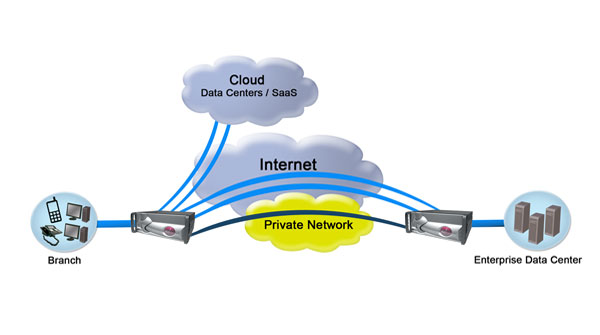
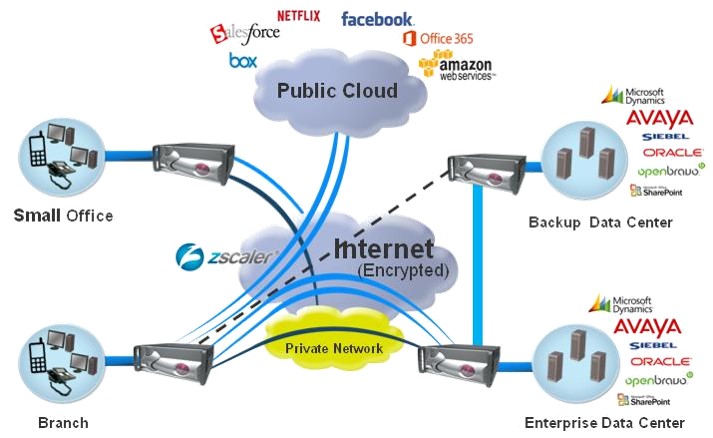
Greater multichannel engagement equips companies with valuable insight about customer behavior. But to pull it off, companies need a reliable network that prioritizes voice over IP (VoIP), video, and other real-time traffic without dropping sessions. By deploying a software-defined WAN (SD-WAN), companies can have better visibility into their network. An SD-WAN performs over any type of transport—including MPLS, broadband, cellular, and satellite—and selects an optimal path for each data packet.

A SD-WAN infrastructure needs reliable internet connectivity with sufficient bandwidth. SD-WANs provide operational flexibility, but also create complexities that stem from implementing WAN load balancing for internal, internet-facing, and mobile workloads. Thus, they require monitoring and tuning internet throughput for performance. A SD-WAN infrastructure must also include secure access to mobile devices as traffic is transported outside the firewall.

FatPipe and Avaya Mobile Experience (AME) helps improve overall customer experience

FatPipe, a provider of intra-corporate WAN solutions, has developed a secure multi-path VPN (MPVPN) to be implemented for hybrid WAN. It supports bidirectional quality of service (QoS), which monitors the sending and receiving of calls/sessions. An advanced routing architecture that utilizes MPVPN can correct up to 15 percent packet loss on diverse circuits simultaneously, while maintaining toll-quality calls and seamless failover.

Contact centers with mobile customers looking to migrate away from high cost MPLS circuits, now have the option of deploying FatPipe’s dual-path SD-WAN for AME. FatPipe and Avaya came up with a combined solution that equips contact centers with a hybrid WAN mobile infrastructure, which can reduce toll call expenses by up 40 percent annually, per FatPipe.

Call center response is vastly improved

The vendors formed a global alliance to help contact centers achieve those cost savings through joint product verification, pre-integration, and certified solutions. Beyond cost savings, the vendors see companies bridging an existing technology gap.

Companies that implement FatPipe’s SD-WAN with AME can control, monitor, and maintain multiple WAN connections, eliminating the need for Internet Service Provider (ISP) management. As a result, smartphone users get more self-service options on a hybrid network that’s flexible and can accommodate new cloud-based applications.

Contact FatPipe Networks at 801-683-5656 x 1224 for more information.  www.fatpipeinc.com.
25 Nov

Cloud connectivity more important now than ever

Cloud connectivity more important now than ever.

The software-defined wide-area-networking (SD-WAN) ecosystem is expanding into multiple clouds as the largest public cloud providers race to provide connectivity and integrations with SD-WAN technology. This is a win for everybody.

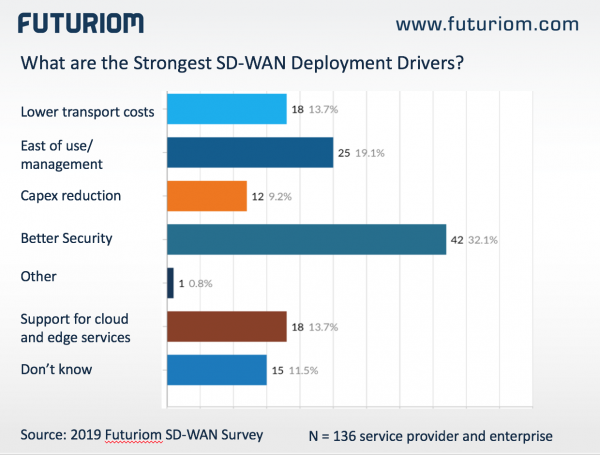
Futuriom SD-WAN Survey 2019

With virtual networking connection program such as Microsoft Azure Virtual WAN and Amazon’s Direct Connect, application programming interfaces (APIs) make it easier for the SD-WAN technology providers to tie into the public cloud at nearby points-of-presence (PoPs), speeding up access to the public clouds.

Imagine a Web of virtualized services being connected across the globe at key interconnection points, with the capability to exchange key information about the performance standards for applications. This is one of the big drivers of SD-WAN, which enables enterprises to speed up performance and access to business applications in the cloud.

Microsoft has been the leader here, describing its Azure Virtual WAN as a way to provide optimized WAN branch connectivity to Azure, its cloud services. The access points are placed in regional hubs at Internet exchange points in carrier hotels or data centers. This can enable services such as site-to-site virtual private networking (VPN), point-to-site VPN (point-to-site), and ExpressRoute. In addition, direct connections into Azure virtual WAN can enable high-performance network connectivity for cloud applications such as Office 365. Microsoft has architected its entire network to bring apps closer to the service edge.

FatPipe Networks, like other SD-WAN vendors, is quickly adopting integrations with the major cloud providers to leverage these services. Earlier this year, FatPipe announced the availability of FatPipe SD-WAN for Azure, which provides SD-WAN customers direct connections into the Microsoft Azure cloud.

By hosting a virtual endpoint, or gateway in Azure, the FatPipe SD-WAN service can improve connection and customer experience for access to Azure applications and cloud-hosted business applications such as Microsoft Office 365. FatPipe says the direct cloud access will speed up connections and avoid problems such as session drops. FatPipe does this by hosting a specific FatPipe virtual machine on the Azure platform. FatPipe SD-WAN for Azure is built around FatPipe’s MPSec technology, which provides additional WAN transmission security versus standard encryption. The improved security is targeted first at small to medium businesses where FatPipe is primarily focused, then multinational corporations, and government agencies that want to use cloud applications but are concerned about security and compromised ISPs.

But such edge connectivity does not stop at the major clouds. It will also be used to optimize performance of specific business cloud applications, such as Unified communications as a service (UCaaS).

For example, FatPipe has announced a partnership with RingCentral to deliver higher quality VoIP calls. Other SD-WAN vendors are looking to forge relationship with VOIP and UCaaS services. Connecting directly to the cloud PoP for a specific VOIP services can help reduce jitter and latency.

FatPipe’s backing a strong trend of the broader SD-WAN ecosystem, in which software and service vendors partner with Microsoft and other cloud providers to provide integrated services for WAN connectivity to cloud apps.

Now, imagine this theme spreading, as it will – to Amazon, Google, and other major cloud provider. The expansion of edge-optimized cloud connectivity extends the edge networking capabilities among partners, building a robust ecosystem.

Futuriom research indicates that the top three reasons that enterprises are adopting SD-WAN including improving security, management, and support for edge cloud services.

Providing inter-connectivity with the major cloud providers has the potential to hit on all three of these, as managers can now provision and deploy secure virtual networks across clouds. This will help them manage the user experience in the increasingly cloudified world.

29 Oct

SD-WAN Growing Use Cases for the Cloud

SD-WAN: Growing Use Cases for the Cloud

It’s remarkable how fast software-defined wide-area networking (SD-WAN) has gained momentum. Many people ask why. The answer is: SD-WAN is expanding the functionality of automating and management access to cloud applications.

The primary trigger for the growth and interest in SD-WAN is the shift, over the past decade, of a massive amount of applications to the cloud (both private and public). Networks in the client-server era were built to access applications that were housed either at an enterprise site or, more rarely, in a private data center. But the cloud shifted the game — creating the need for fast access to applications wherever they reside, including the cloud when accessed across the Internet.

Cloud Connection Challenges

From the CIO or CTO’s perspective, cloud has many benefits but also presents many challenges from the network and security point of view. Cloud applications can speed the velocity and agility of IT, enabling your workforce to connect and build on new applications on demand.

But the challenge is that you need to build a new infrastructure to support these cloud applications. There are several challenges to connecting your workforce to this new world of agile cloud applications. Here are a few:

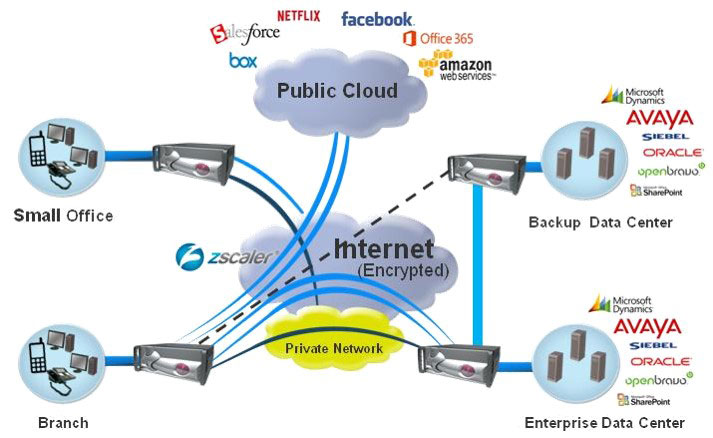
Application Performance: Cloud means there are many routes for workers to connect – and generally they do so using the network, not always under control of the corporate network. They could be using Internet broadband to connect to a cloud application or they might be on a corporate WAN. SD-WAN technology can add network intelligence to the corporate WAN to recognize which applications are being accessed and connect them in the most efficient, cost effective way. It can provide Internet breakout to make sure that general Internet traffic is not routed through expensive private data-center connections (such as MPLS). And furthermore, SD-WAN technology can be used to connect directly to recognize the most common cloud applications (Microsoft Office 365, Salesforce), and connect to application-specific gateways that speed up applications access.

Security: With the increased use of the Internet and cloud technologies, it’s harder for IT staff to assure security when employees are using the network to connect to the cloud. SD-WAN can enable additional network visibility and security functions that assure that cloud applications are being accessed in a secure way. More importantly, by enabling network branches and endpoints with SD-WAN, IT staff can gain more insight into how the networks are being used and implement security policies.

Agility and Automation: In the hardware-based WAN world, networks were connected with complicated hardware configurations and leased lines, making changes to the network topology and architecture difficult. In order to connect to the cloud, a more responsive network is needed to gain control and visibility over cloud connections. With SD-WAN, networks can be more quickly orchestrated and changed using software, increasing the speed with which IT and networking staff can respond to changing business demand. In addition, SD-WAN deployments can often be set up using software-based automation tools such as templates.

End-User Attraction: Making Life Easier

What’s most powerful about SD-WAN is that it has the potential to solve several of these challenges at once, by providing an integrated, software-driven platform for automating network policy and applications.

Cloud applications mean that traffic flows within the network have drastically changed and become inefficient. The technology to handle these new traffic flows is embedded in many SD-WAN platforms.

SD-WAN emerged with a few use cases anchored to the need for fast cloud access, but those use cases are now expanding, according to Futuriom research.  That is because the WAN is a key enabler — and also possibly stumbling block — for cloud applications.

So how exactly does SD-WAN do that? The MEF, a global industry alliance comprised of more than 150 networking technology and service-provider organizations, is working to reduce the confusion surrounding SD-WAN technologies and solutions. As part of their work the MEF has identified the following as being fundamental capabilities of SD-WAN managed services:

  • Secure, IP-based virtual overlay network
  • Transport-independence of underlay network
  • Service assurance of each SD-WAN tunnel
  • Application-driven packet forwarding
  • High availability through multiple WAN links
  • Policy-based packet forwarding
  • Service automation via centralized management, control and orchestration
  • The MEF also identified some value-added services that are beyond the fundamental SD-WAN service offering. This includes WAN optimization and advanced security services.

These expanding capabilities of SD-WAN show why it’s growing so fast – it’s become the Swiss army knife of WAN automation and management. This is why IT and network managers have taken a liking to the approach is that streamlines the management of many of challenges posed to given users a better experience in connecting to the cloud.

FatPipe Networks has been developing and delivering traffic management solutions for over 17 years and was “SD-WAN before SD-WAN was cool”- Gartner.   With 12 seminal patents and a comprehensive suite that addresses any SD-WAN need, FatPipe Networks is a must for any WAN administrator considering or updating their WAN traffic management needs

01 Oct

SD-WAN can jump start digital transformation initiatives

SD-WANs can jump start digital transformation initiatives

ZK Research data shows that 94% of companies have at least one digital transformation initiative underway. The research firm also found that a shocking 75% of CxOs admittedly do not know what their industry will look like or who their competitors will be in five years. This means that success in the digital era isn’t based on the company that has the lowest prices, best products, or even the top people.

Sustaining a market leading position is predicated being agile and having the ability to quickly adapt the business to seize new opportunities faster than the competition. The digital era is Darwinism at its finest – it’s the most adaptable that survives and the rest are fodder for the winners. This is why the transition to digital is at the top of every CxOs priority list.

While the concept of becoming digital makes sense, executing a plan to transform can be quite intimidating for most organizations, particularly well established businesses that haven’t relied on technology in the past, as there’s a perception that digital transformation requires big moonshot-like initiatives and investments.  Retailers believe they need to Amazon over night while taxi and car service companies want to Uber up. The fact is, while there is urgency, there’s no need to try and make that hard pivot overnight.  In fact, moonshots often fail and business and technology leaders need to understand that digital transformation is more about executing manageable chip shots rather than complex moonshots.

The chip shot reference should make it clear that I’m an avid golfer and I’ll extend the analogy further by pointing out digital transformation should be done one shot at a time and SD-WANs can facilitate that. For example, a bank might put a futuristic plan together for “digital banking” that involves a number of new technologies, such as virtual reality, digital signs, Internet of Things, digital mirrors and other advanced technology.  One might look at the end game and find the journey so daunting that it paralyzes them.

A better way to approach this type of digital plan is through a series of smaller initiatives where the deployments can be controlled and managed the ROI easily calculated. For example, the bank may choose to put video terminals in an office at all branch locations, allowing customers to talk directly to product experts, even if that branch has no local personnel with that knowledge base. This is a small, manageable change that’s easy to implement with a measurable ROI.  Without video, experts travel from branch to branch limiting the number of appointments per day to just a few.  With video, product experts can be available all day long giving the bank the ability to sell more products to more people.

What does SD-WAN have to do with this?  The answer is everything! We live in a customer experience driven world where a good customer experience leads to loyalty and a higher share of wallet.  A bad experience will drive customers away, perhaps never to return. One interesting factoid that supports this, comes from ZK Research, which found that two-thirds of millennials changed loyalties to a brand in 2018 because of a single bad experience.

Here is where a little SD-WAN will pay big dividends as video requires a high quality, low latency and jitter free network. Imagine being in a bank, sitting a high end customer down in front of a terminal only to experience a horrible video experience. That customer may never try and service again.  Instead of fueling customer acquisition might be chasing them away.  Also, the bank may be less likely to recommend it, giving the impression the project was a waste.

The key takeaway here is that success with digital transformation is dependent on network modernization, particularly the WAN where bandwidth isn’t a bountiful commodity. Businesses require an agile, secure and dynamic network capable of supporting whatever applications are deployed.  Legacy WANs cannot support digital businesses, but SD-WANs are built from the ground up with agility and flexibility in mind. With the banking example, the video service requires flawless connectivity and SD-WANs can automate the process of prioritizing traffic or reserving bandwidth to ensure the quality remains high. When the call is over, the reservation on bandwidth needs to be removed to not impact other applications. These processes on a legacy network, using manual processes are slow, time consuming and error prone and will likely lead to application problems. SD-WANs make this touch free.

The digital era has arrived and IT leaders need to be prepared.  This requires agility and dynamism at the network layer as it’s the resource that connects everything. SD-WANs create a foundation that enables businesses to accelerate their digital efforts.

FatPipe Networks have been developing and innovating SD-WAN solutions for 18 years.  For the best of breed SD-WAN solutions, call FatPipe today at 801-683-5656.  FatPipe Networks www.fatpipeinc.com